
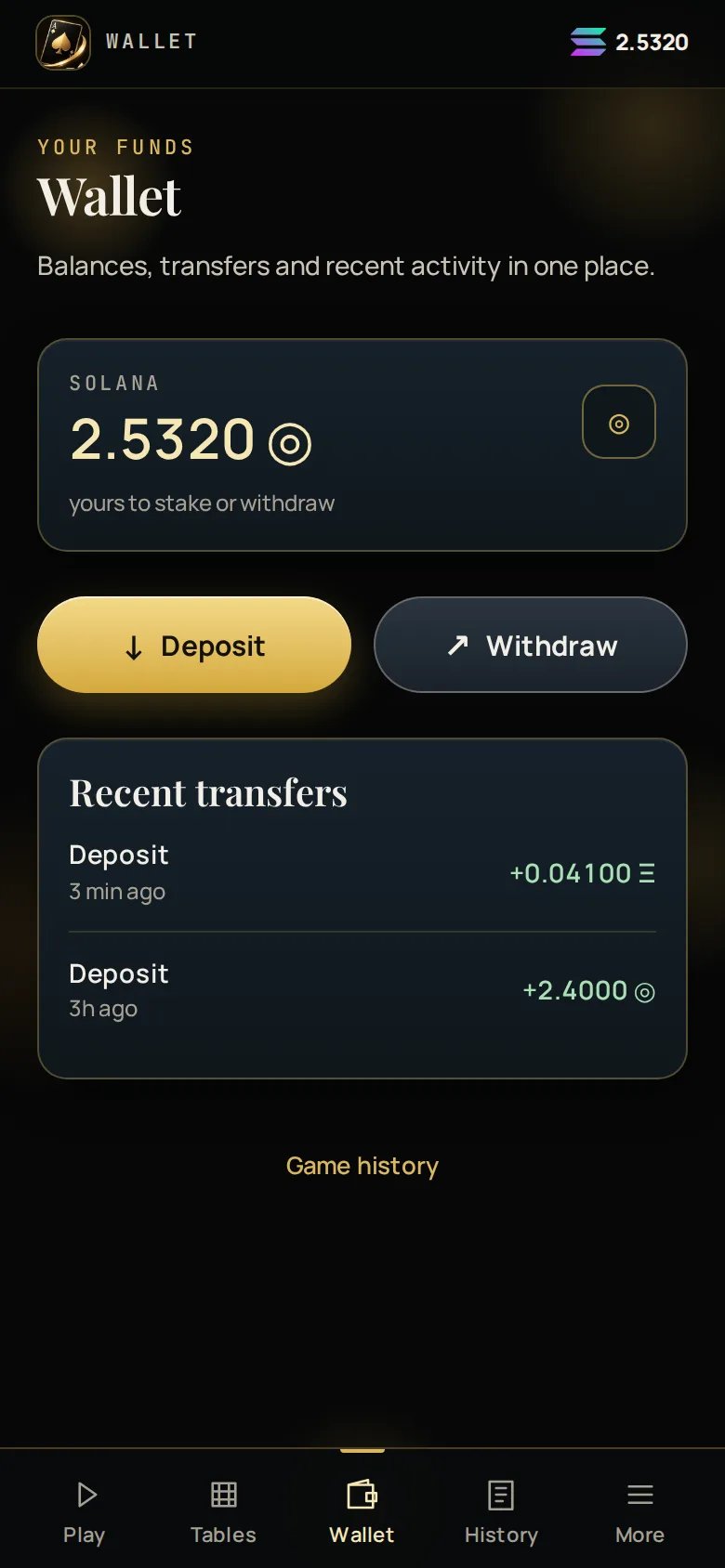
The numbers
Available and withdrawable are deliberately different numbers. A fresh deposit
is playable immediately and withdrawable an hour later — so the hold never stops
you playing with your own money, only cashing it straight back out.
Precision
Amounts are stored as whole base units and displayed to a fixed number of decimals:
Bets are placed in multiples of 1,000 base units. That is what lets a 3:2
blackjack and a 2:1 insurance settle to an exact whole number rather than
something that has to be rounded.
ETH is counted in gwei rather than wei on purpose. One ETH is 1018 wei,
which is larger than the range a database integer or a JavaScript number can
hold exactly — counting in wei would start losing precision at fractions of a
single ETH.
Activity
The wallet lists recent movements — deposits credited, bets settled, withdrawals sent — each with its own reference. Every ledger entry Ace Up writes carries a unique reference, which is how a deposit that is seen three times is still only credited once. For the full record of hands rather than money, see Records.Tipping another player
Tap a player’s name at any table to open their card, then Tip. The amount comes off your available balance and lands in theirs the same second; both of you get a message from the bot. The minimum tip is 0.001 SOL, and tips are sent in steps of 1,000 base units like every other amount in Ace Up. A tip is a transfer between two players, so it never touches the house and never counts as a bet. It cannot be undone, so check the name on the card before you send.Related
Deposit
Your permanent address on each chain.
Withdraw
Limits, the DM confirmation, and who pays the fee.